Of all the life-saving appliances on board a vessel, the life raft is perhaps the most misunderstood when it comes to maintenance. Operators sometimes treat life raft servicing as a box-ticking exercise — a certification to be renewed at the lowest possible cost. This approach carries serious risk, both regulatory and human.
The Regulatory Baseline
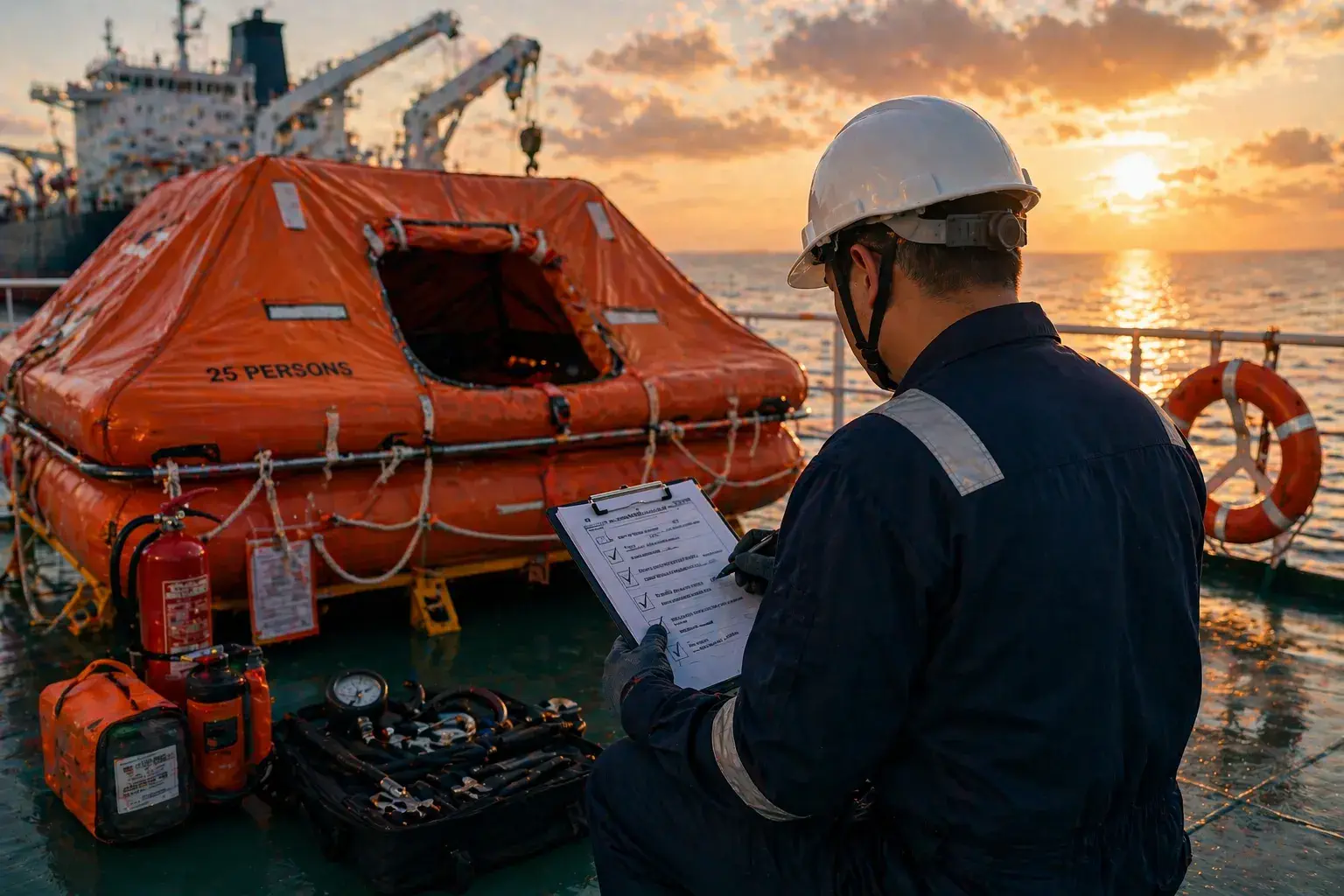
Under SOLAS Chapter III and the LSA Code, life rafts must be serviced at approved service stations at intervals not exceeding 12 months. The LSA Code specifies that all consumable items within the life raft’s equipment pack — including water rations, food, flares, and first aid supplies— must be within their expiration dates and maintained in serviceable condition.
Davit-launched life rafts are subject to the same authorized service provider framework that applies to lifeboats and rescue boats under MSC.402(96). This means annual thorough examinations must be conducted by certified personnel, and five-year overloads and repairs must also be carried out by authorized service providers.
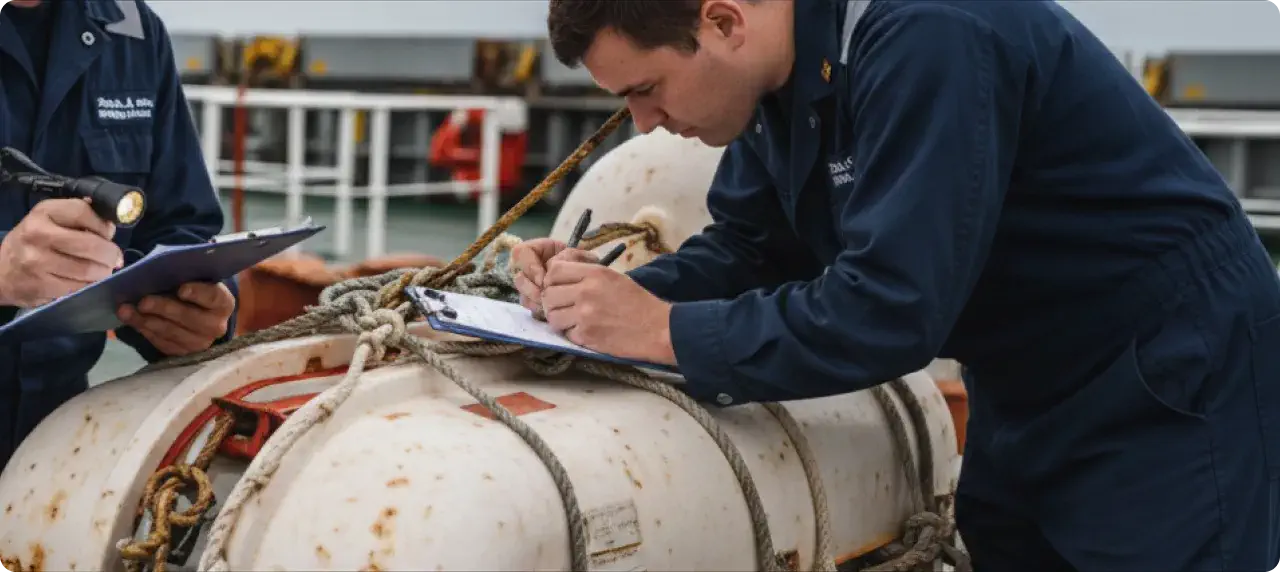
A compliant life raft service is far more than an inflation check. It includes a full inspection of the canopy, buoyancy tubes, floor, and internal fittings; testing of the CO2 inflation system; examination of the painter line and hydrostatic release unit; replenishment or replacement of all pack equipment within expiry; and re-certification to confirm the raft meets current LSA Code standards.
Hydrostatic release units (HRUs) — the devices that automatically release the life raft if the vessel sinks — require their own attention. HRUs must be replaced or serviced according to the manufacturer’s recommendations, typically every two years.
Offshore-Specific Considerations
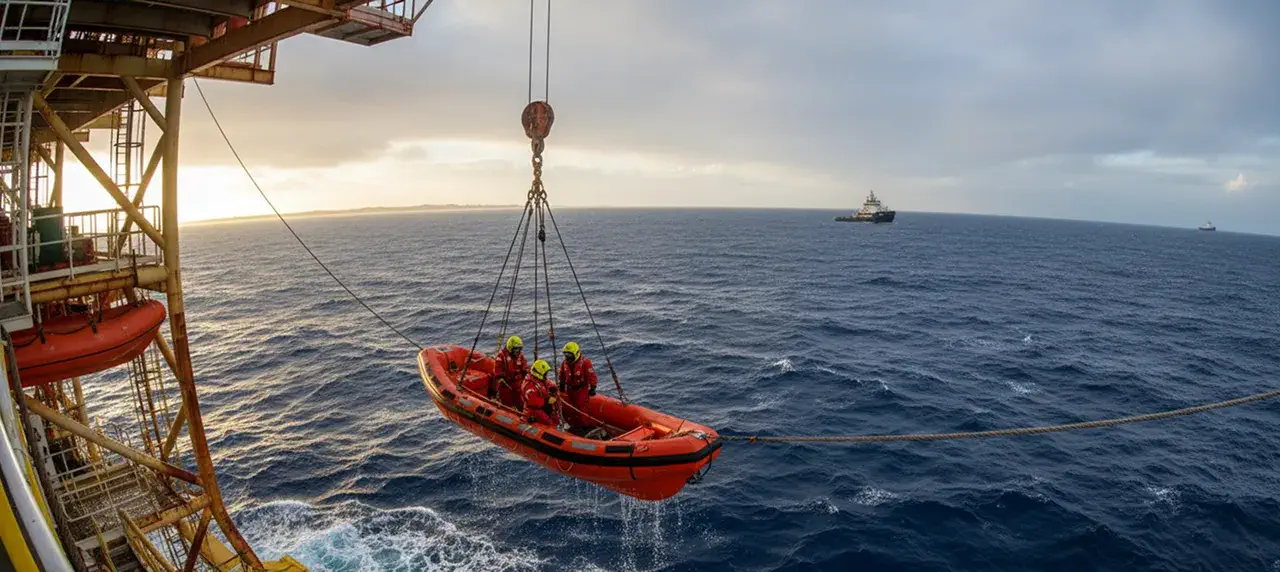
Offshore installations and MODUs present specific challenges for liferaft maintenance. Muster-on-demand operations, remote locations, and the need for rapid deployment mean that liferaftsmust be in verified operational condition at all times. Regular onsite inspections by authorizedtechnicians — not just annual station servicing — are best practice for high-risk offshoreenvironments.
Our approved service station operates in full compliance with IMO, SOLAS, and flag staterequirements. We service all major makes and models of inflatable liferafts for marine andoffshore clients, with full certification documentation and minimal vessel downtime.