
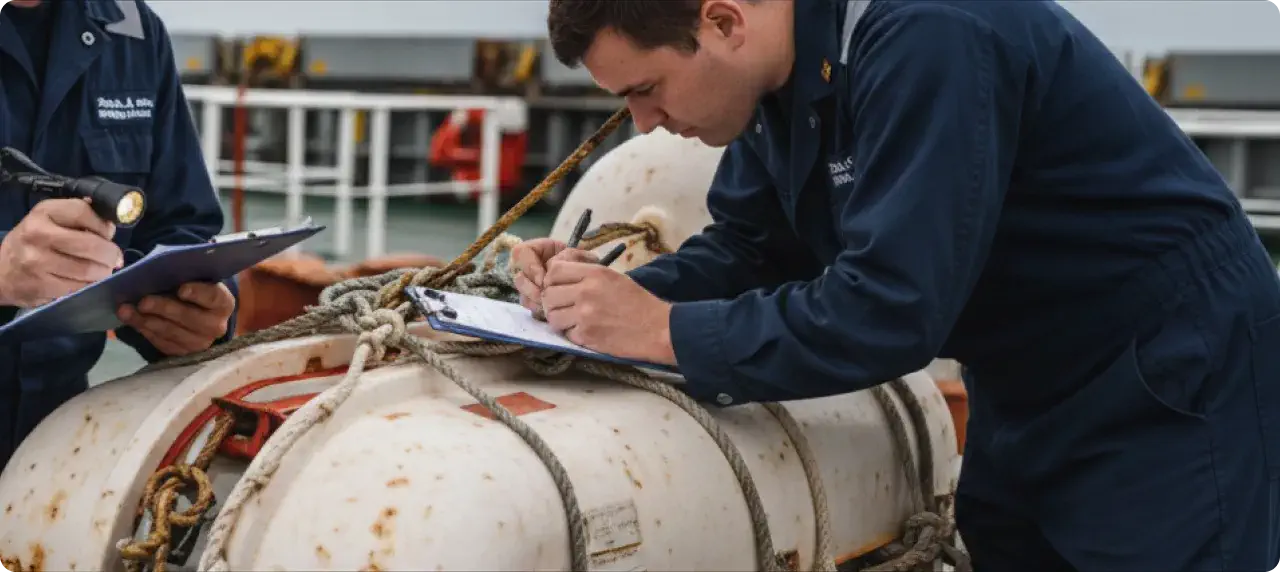
Port State Control (PSC) inspections are the enforcement mechanism that gives SOLAS and the LSA Code their teeth. For operators and service providers in the marine and offshore sector, understanding which life-saving appliance deficiencies most commonly lead to vessel detention is essential knowledge.
The Most Common LSA Deficiencies Found During PSC Inspections
Across the major PSC regimes — including the Paris MOU, Tokyo MOU, and the US Coast Guard— life-saving appliances consistently rank among the top categories for deficiencies and detentions. The most frequently cited issues include:
Expired or missing equipment in life raft and lifeboat packs — flares, water rations, and first aid supplies beyond their expiry date. These are basic maintenance failures that reflect poorly on onboard safety culture and are entirely avoidable.
On-load release gear not properly tested or not compliant with the IMO 2006 Guidelines — this remains a significant issue despite the compliance deadline having passed.
Lifeboats and davits that cannot be launched within the required five-minute timeframe or are found to be mechanically deficient during operational tests.
Hydrostatic release units on life rafts that are past their service date and have not been replaced.
EPIRBs that are not properly registered, or that do not meet the current satellite-based requirements of the modernized GMDSS framework.
Lifejackets with failed lights, missing whistles, or damaged fabric that has not been identified and replaced through routine inspection.
The Cost of Detention
A PSC detention can cost a vessel owner tens of thousands of dollars per day in lost revenue, portfees, and the emergency servicing required to clear the deficiencies. Beyond the financial cost,detention is reputational damage that affects charter rates and client confidence.
Prevention Is the Only Strategy
The deficiencies that lead to PSC detention are, almost without exception, preventable throughregular, properly documented maintenance by authorized service providers. A structuredmaintenance schedule aligned with SOLAS Chapter III, the LSA Code, and MSC.402(96) —combined with thorough internal safety audits — is the most effective protection against PSCaction.
We provide pre-PSC inspection audits and full LSA maintenance services for marine andoffshore fleets. Our team has deep experience with PSC requirements across multiplejurisdictions and can identify deficiencies before the inspector does.